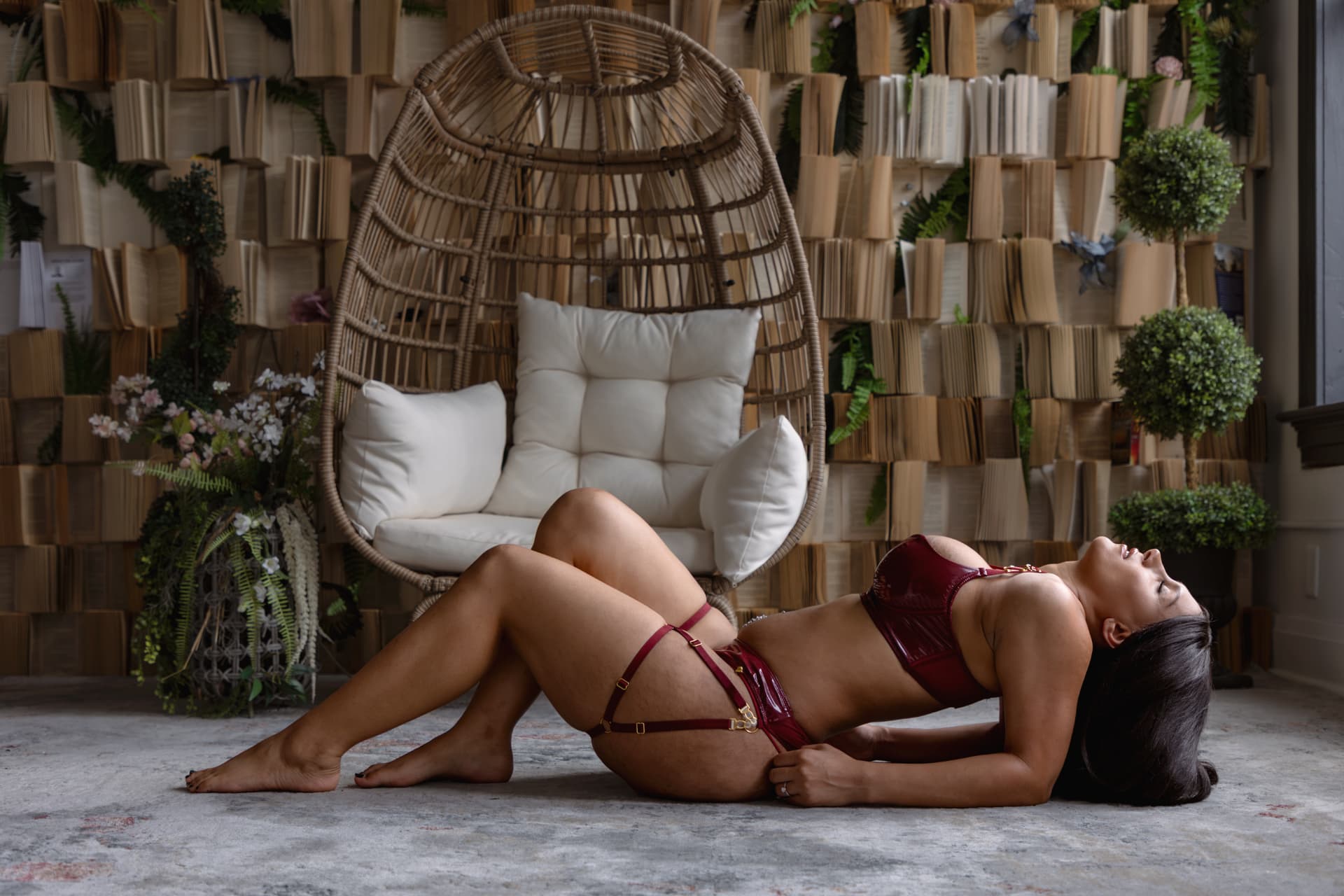
What to Expect
You Don’t Need to Know How to Pose for a Boudoir Session
September 20, 2026 · 7 min read
One of the first things women tell us is, “I have no idea how to pose.”
Good. You’re not supposed to.
Most people aren’t standing around their house practicing where to put their hands, how to angle their hips or what their face should be doing when a camera is six feet away. And the poses you see in finished boudoir photographs rarely happened because someone walked into the studio, hit the perfect position and held it.
There’s a lot more direction happening than you see in the finished image.
At River Rose, posing isn’t something we expect you to bring with you. It’s part of what we’re there to do. And usually when someone says she doesn’t know how to pose, what she’s really worried about is looking awkward.
That makes sense.
You’re probably imagining yourself standing there while everyone waits for you to figure out what to do with your hands, your face, your legs and everything else all at once.
We don’t put you in that position.
What Guided Posing Actually Looks Like
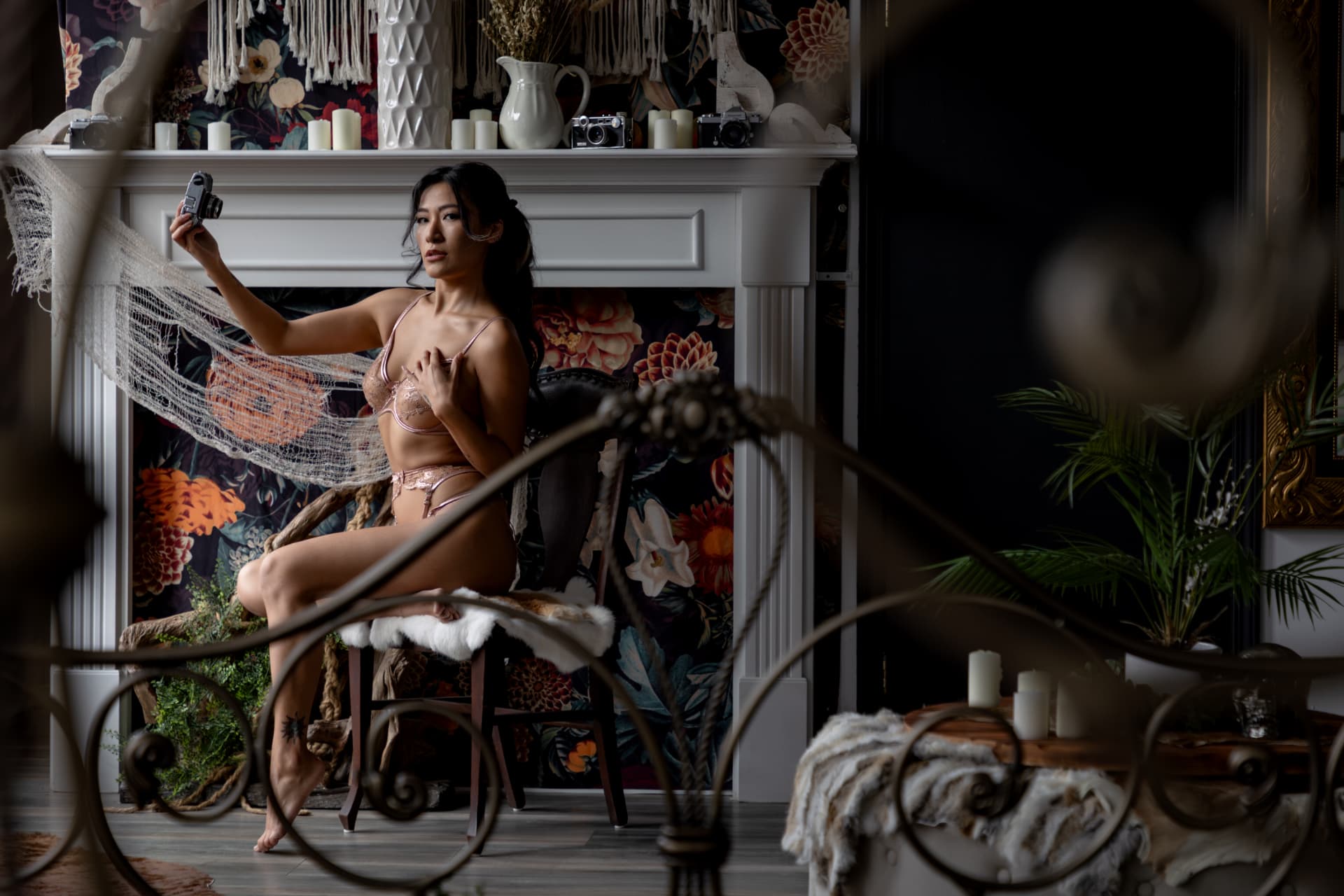
You’re guided throughout the session. Where to look, how to move, what to do with your hands and how we move from one setup to another. You also have our all-female support team with you, including a posing coach who can demonstrate when needed.
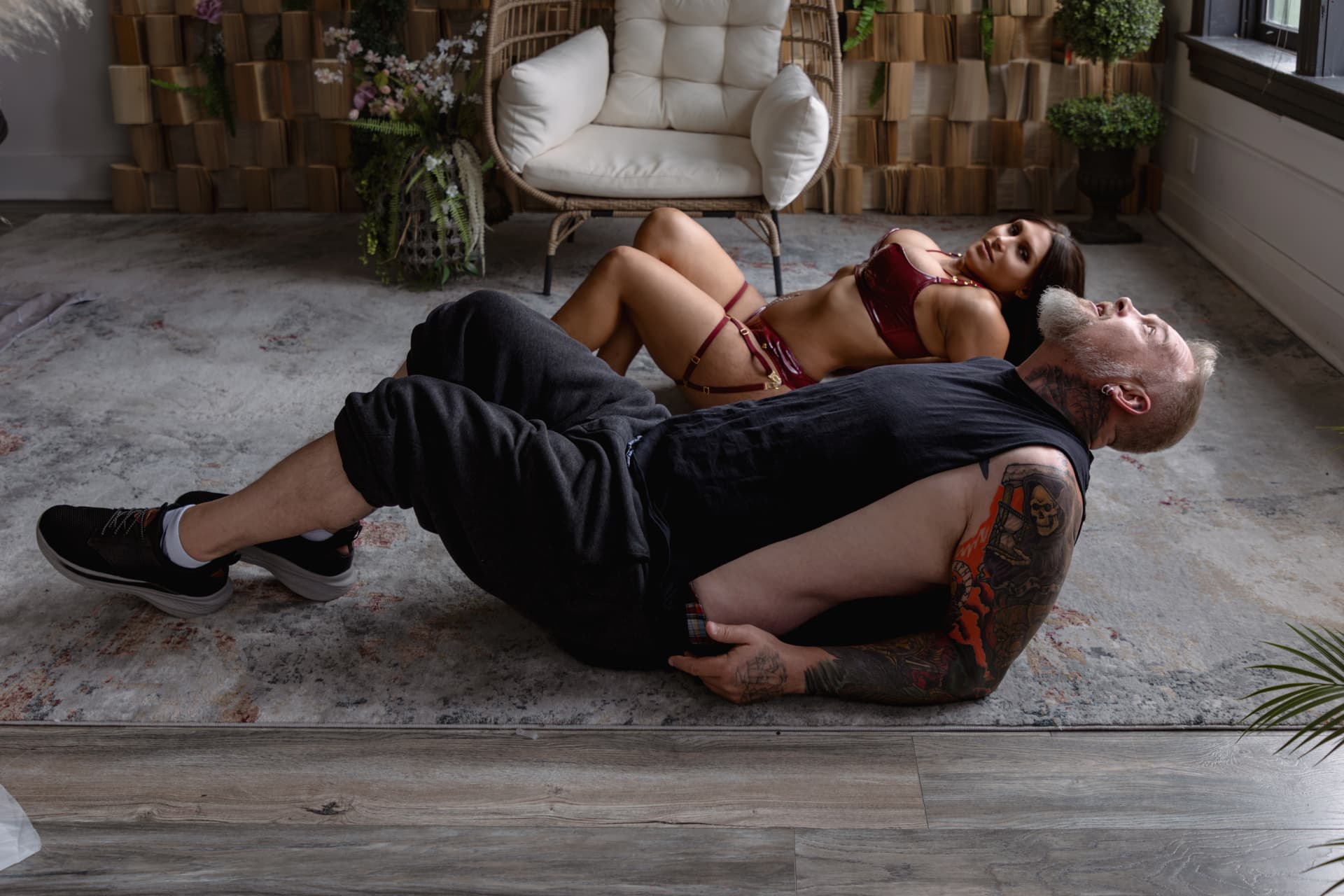
The point isn’t to hand you a list of poses to memorize. It’s to take that responsibility off of you.
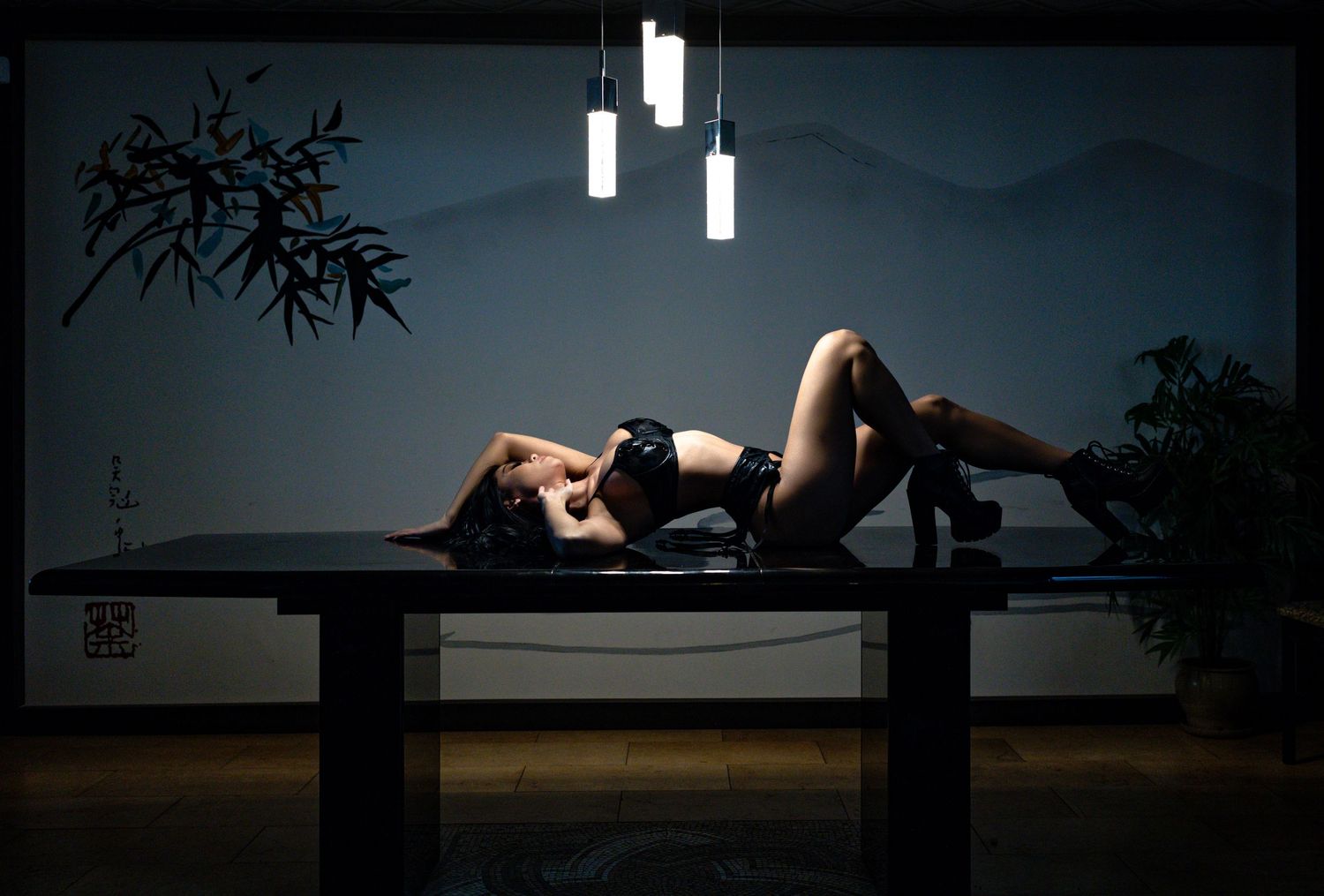
And posing is about more than putting your body into a certain position. Lighting, camera angle, posture, expression, movement and timing all work together. A small adjustment can completely change how a photograph reads.
You don’t need to think through any of that while we’re shooting.
We do.
What Do I Do With My Hands?
The same goes for the question we hear constantly: “What am I supposed to do with my hands?”
We’ll tell you.
That probably sounds overly simple, but it’s one of the biggest differences between being photographed casually and being photographed with direction. You’re not left standing there hoping something looks right. We’re watching what the camera sees and adjusting from there.
Your expression is part of that too.
You don’t need to know how to “look sexy” on command. Sometimes we want direct eye contact. Sometimes we don’t want you looking at the camera at all. Sometimes the expression is softer, stronger, playful or barely there.
And no, we’re not going to tell you to “look sexy” and then stare at you waiting for something to happen.
That’s not direction.
We’ll give you something specific to work with.
Some Poses Feel Strange While You’re In Them
There’s also something finished photographs don’t show very well: some poses feel a little strange while you’re doing them.
A photograph can look relaxed even though you’re thinking, “There is no way this looks good.”
Then you see it.
That’s why we don’t need you judging the pose while you’re in it. If something genuinely hurts or doesn’t work for your body, tell us. We can adjust. But unfamiliar doesn’t always mean wrong.
Every Woman Moves Differently
Every woman moves differently. Height changes things. Proportions change things. Flexibility changes things. Injuries, mobility and comfort all matter.
So if you’ve looked through a boudoir portfolio and thought, “My body doesn’t look like hers,” that’s fine.
We’re not trying to make it.
The goal isn’t to force every woman into the same handful of poses and recreate the same photographs over and over. We work with the woman standing in front of us.
That also means the first few minutes of your session probably won’t feel exactly like the last few.
You’re going to be more aware of yourself at the beginning. Most women are. There’s a camera pointed at you, you’re in a new environment and you’re learning how we work.
So we start there.
As the session moves forward, you get used to being directed. You stop trying to anticipate what you’re supposed to do next because you realize we’re going to tell you.
It becomes considerably easier once you stop trying to do our job for us.
You Don’t Need to Practice Poses Beforehand
You also don’t need to spend the week before your session practicing poses in the mirror.
If you want to save inspiration photos, absolutely. They can help us understand what you’re drawn to, but they aren’t homework.
You don’t need to memorize Pinterest poses. You don’t need to figure out your “good side.” And you don’t need to practice facial expressions in the bathroom mirror.
A little stretching beforehand can help because boudoir posing uses your body more than most people expect. Loosen up your neck, shoulders, back, hips and legs. Nothing extreme. You’re just making movement a little easier once we start.
And if you have an injury, mobility limitation or something you know your body doesn’t comfortably do, tell us. We can work around it.
“I’m Just Not Photogenic”
Then there’s the other thing usually attached to the posing conversation:
“I’m just not photogenic.”
Most of the evidence women use to prove that comes from casual photographs.
Someone pulls out a phone. The angle is whatever it happens to be. The lighting is whatever happens to be in the room. You’re mid-sentence, mid-blink or completely unaware the picture is being taken.
Then you look at that one frame and decide that’s what you look like in photographs.
A controlled portrait is different.
The lighting is being controlled. The camera position is being controlled. Your posture and expression are being directed. We’re waiting for the right moment instead of catching whatever moment happened to occur.
Those things change a photograph.
A lot.
So What Do You Actually Need to Know?
So what do you actually need to know about posing before booking a boudoir session?
Almost nothing.
You don’t need modeling experience. You don’t need a pose list. You don’t need to know what to do with your hands. You don’t need to know which angles work for you.
Show up. Listen. Tell us if something doesn’t feel comfortable.
We’ll handle the rest.
River Rose Boudoir is located in St. Charles, Missouri, and every session starts with a free consultation where we can talk through the process, your questions and what you want from the experience.
Start with a conversation.
Common Questions
- Do I need to know how to pose for a boudoir session?
- No. Posing is directed throughout your session. You are told where to look, how to move and what to do with your hands, and a posing coach can demonstrate when it helps.
- What do I do with my hands during boudoir photos?
- We tell you. Hands are one of the most common questions, and they are directed along with posture, expression and movement while we watch what the camera sees.
- Should I practice poses before my session?
- You do not need to. Saved inspiration photos help us understand what you are drawn to, but they are not homework. A little stretching beforehand is the only preparation that really helps.
- What if I am not photogenic?
- Most of that belief comes from casual phone photographs with uncontrolled lighting and angles. In the studio the lighting, camera position, posture and expression are all directed, which changes the photograph considerably.
- What if a pose hurts or my body does not do it?
- Tell us and we adjust. Height, proportions, flexibility, injuries and mobility all matter, and we work with the woman in front of us rather than forcing the same poses on everyone.
Ready to see what this could look like for you?
Free consult