
Body Image & Confidence
I Need to Lose Weight First
October 5, 2026 · 9 min read
It sounds like a pretty straightforward thought. You don’t feel great about your weight right now, so you decide you’ll wait. Maybe ten pounds would make you feel better. Maybe twenty. Maybe you just want your stomach to sit differently in your clothes or your arms to look a little different in pictures.
But does this sound familiar?
You get dressed and reach for the oversized shirt because you think it hides your stomach. You choose the long sleeves because you don’t like your arms. You pass on the fitted dress even though you like it because the looser one feels safer. You catch your reflection from an angle you weren’t expecting and spend the next hour thinking about it. Then someone takes a picture, and before you notice your expression, where you were, or who you were standing beside, your eyes go directly to the part of your body you’ve already decided you don’t like.
That’s where “I need to lose weight first” can become much bigger than weight.
Sometimes a big sweatshirt is just comfortable. Sometimes long sleeves are simply what you prefer. The difference is what’s going through your mind when you reach for them.
If the thought is, “If I wear this, nobody will notice my stomach,” then the clothing is doing more than keeping you comfortable. It’s being used to manage the part of your body you’re worried someone else might notice. Studies on body image and clothing behavior have documented this kind of camouflage behavior, particularly among people experiencing greater dissatisfaction with their bodies.
And once you start thinking that way about one part of yourself, it can work its way into a lot more than your closet.
Maybe you move to the back when someone pulls out a phone. Maybe you automatically turn sideways. Maybe your partner tells you that you look good and your first response is explaining why you don’t. Maybe someone shows you a picture from a night you genuinely enjoyed, and instead of remembering the night, you zoom in on your stomach.
Over time, it can become automatic. If your arms are the thing you’ve been worrying about all week, there’s a good chance they’re the first thing you check when someone shows you a photo. If it’s your stomach, your eyes go there first. Body image research has documented this kind of appearance-focused attention, where concern about a specific area can influence what someone notices first and how long they stay focused on it.
So a photograph that lasted a fraction of a second can turn into several minutes of picking apart one area while barely noticing the rest of the image.
Then the Waiting Starts
You tell yourself you’ll buy the lingerie when you lose the weight. You’ll schedule the photos when your stomach is smaller. You’ll wear the dress when your arms look better. You’ll feel more comfortable with your picture being taken once you’re finally more comfortable with your body.
There’s nothing wrong with wanting to lose weight. There’s nothing wrong with changing how you eat, exercising, getting stronger or deciding you’d feel better at a different weight. Those are personal decisions, and pretending nobody ever wants to change something about their appearance isn’t useful.
The problem is when the goal starts affecting decisions that have very little to do with the number on the scale.
A photograph you hated changes how you stand in the next one. The part of your body you’ve been thinking about becomes the first thing you consider when you shop for clothes. You avoid an outfit you genuinely like because of the way it fits across one area. You start putting certain things off until your body reaches a point where you think you’ll finally be comfortable doing them.
And the finish line can move.
You can lose the ten pounds and still notice your arms. Your arms can change and now you’re thinking about your stomach. You can finally get the photograph you thought you wanted and immediately find another detail to inspect.
At that point, the conversation you’ve been having with yourself is about more than weight.
Hiding More Doesn’t Always Do What You Think It Does
This is something we see often as photographers.
A woman tells us she doesn’t like her stomach, so her instinct is to add more fabric. She doesn’t like her arms, so everything needs sleeves. She’s uncomfortable with her hips, so she reaches for something loose from top to bottom.
There are absolutely times when oversized clothing photographs beautifully. We use oversized shirts, sweaters, jackets, robes and sheets regularly.
The difference is how we use them.
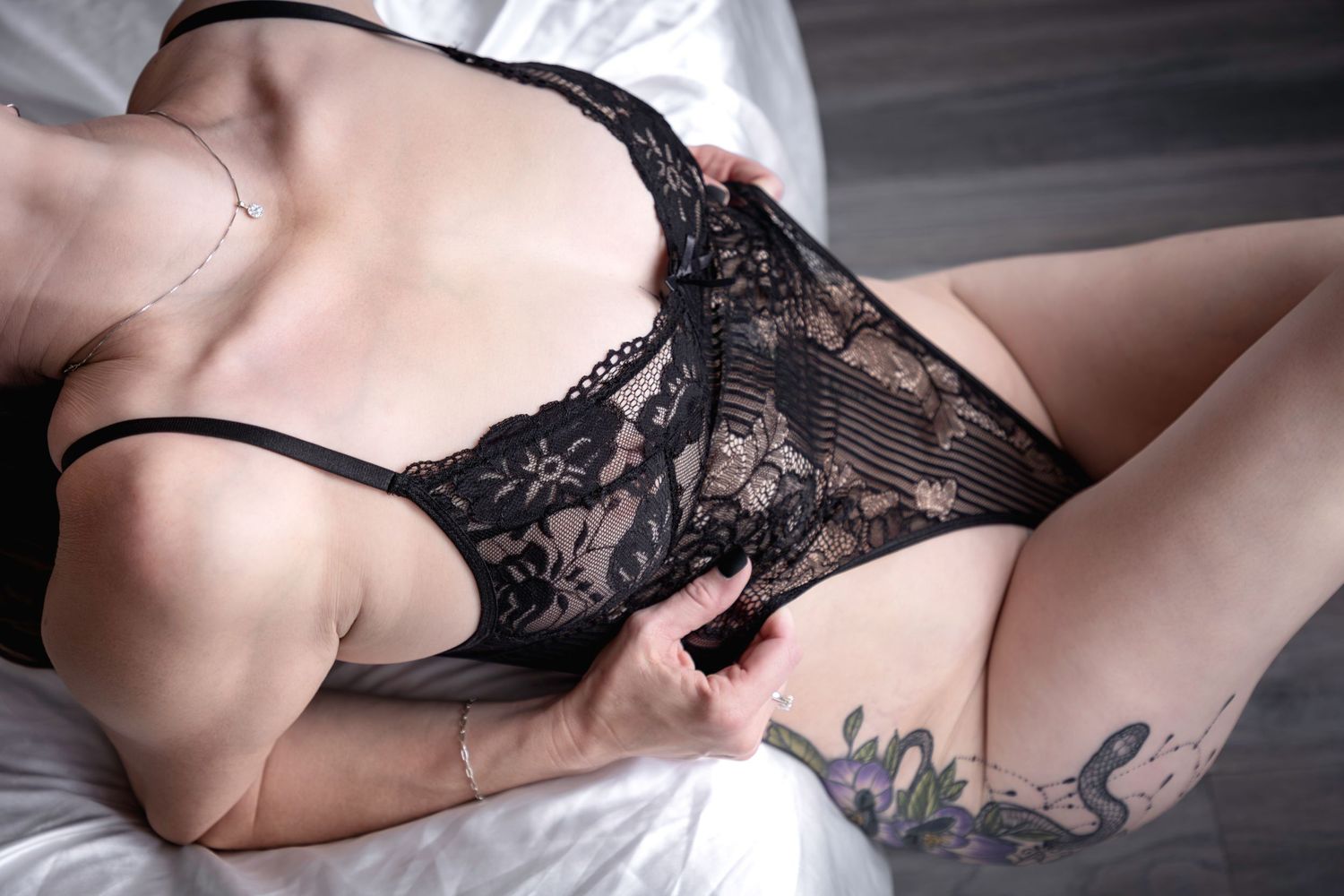
We might pull fabric into the waist instead of letting it hang straight down. We might open a shirt, let it fall from one shoulder, change where a hand is placed, shift the hips or use the garment to follow the shape of the body instead of completely covering it.
From a photographic standpoint, adding more fabric doesn’t automatically create a more flattering result. Loose clothing can hide the waist, soften the distinction between the torso and hips, and remove some of the natural lines we would normally use in posing.
That doesn’t mean tighter is always better. It doesn’t mean showing more skin is better. And it doesn’t mean there’s one correct way to dress your body.
It means “cover it” isn’t always the answer.
Sometimes the curve someone has spent years trying to disguise is the exact line that gives the photograph shape.
It Usually Doesn’t Stop With Clothes or Photographs
We can often tell when someone has been carrying these thoughts for a while, and it isn’t because she walks into the studio and announces that she has low confidence.
It shows up in smaller ways.
She apologizes for her stomach before we’ve taken the first photograph. She tells us which side of her face we shouldn’t photograph. She asks us to hide her arms. She assumes a pose won’t work on her before trying it. When we show her an image, she sometimes goes directly to the area she warned us about instead of looking at the photograph as a whole.
Those habits didn’t begin when she walked into River Rose.
They’ve usually been practiced in dressing rooms, bathroom mirrors, phone pictures, group photographs and ordinary moments for a long time.
And those same thoughts can show up in places that have nothing to do with photography.
Maybe you’re less comfortable when your partner touches the part of your body you don’t like. Maybe you dismiss compliments before they’re even finished. Maybe you change how you sit because you’re thinking about how your stomach looks from the side. Maybe you avoid certain clothes, certain angles or certain situations because you’ve already decided how you’re going to look in them.
That’s a much bigger pattern than simply not liking your picture.
What Happens When You Get a Different Reference?
We’re careful with this because a photography session isn’t therapy, and we’re not going to tell someone that taking a few photographs will erase years of insecurity.
That isn’t realistic.
But photography can sometimes give you information you weren’t expecting.
We’ve photographed women who came into River Rose already knowing what they believed they wouldn’t like. They told us before we started. Their stomach. Their arms. Their thighs. Their chin. A scar. A change in their body after having children. Something age had changed that they were still getting used to.
Then they saw an image.
Sometimes the first thing they noticed wasn’t the thing they had spent the morning worrying about.
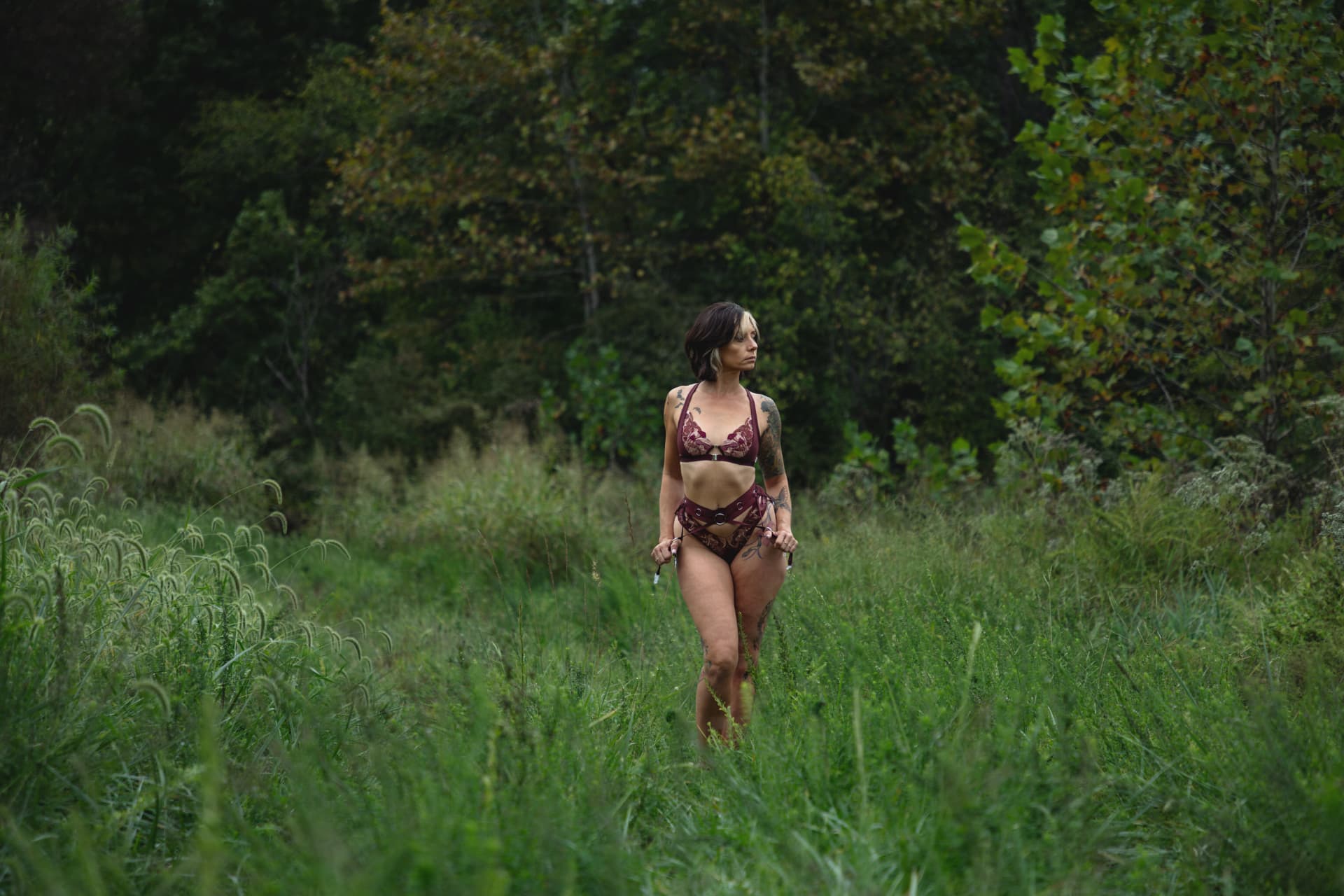
It was their expression, the shape created by the pose, or the curve they normally tried to cover that ended up giving the photograph its strength. In other images, they were surprised by how different their body looked when the lighting, camera position, wardrobe and pose were being controlled instead of catching themselves in a random phone picture or an unforgiving bathroom mirror.
That doesn’t prove the insecurity was imaginary. It doesn’t mean every concern disappears. It doesn’t guarantee someone suddenly loves every photograph of herself.
It gives her another reference.
For a long time, the reference may have been the picture she hated, the dressing-room mirror, the shirt that didn’t fit the way she expected, or an unflattering angle she caught by accident. Enough of those moments can start to feel like proof.
Then she sees a photograph that doesn’t match the picture she had already formed in her head. The stomach she was worried about isn’t dominating the image. Her arms don’t look the way she expected them to. For the first time in a while, she may be looking at the entire image instead of immediately searching for the part she thought needed fixing.
Now she has something different to compare those concerns against. If most of what she has been using to judge herself came from bathroom mirrors, fitting-room lighting, rushed phone pictures and photographs where she had no control over the angle or timing, a carefully created portrait can challenge some of the conclusions she has been drawing from those moments.
And that can reach farther than the photograph itself.
When you’ve spent years assuming certain parts of your body need to be hidden, you start making everyday decisions around that belief without thinking much about it, from the shirts you choose to where you stand in a photo. Eventually those reactions can feel normal because you’ve repeated them so many times.
Seeing yourself differently doesn’t erase all of that, but it can interrupt it. Maybe you realize the waist you keep covering is something you actually like when you can see its shape. Maybe you notice how much stronger a photograph feels when you aren’t trying to make your hips disappear. Maybe you stop assuming every picture of you is going to confirm the same things you already believe.
That shift can show up quietly. You may choose a shirt because you like how it fits instead of immediately asking whether it hides enough. You may look at a photograph without zooming straight into your stomach. You may hear a compliment without automatically correcting the person giving it. You may become a little less certain that every curve, line or change in your body needs to be managed before you can feel good about the way you look.
None of that requires pretending you suddenly love everything about your body. You can still want to lose weight. You can still want to get stronger, change how you eat or work toward a different size. Those goals can exist without becoming the condition attached to every photograph, outfit or experience along the way.
That’s where “I need to lose weight first” deserves a little more thought. Not because wanting to lose weight is wrong, but because it’s worth noticing how many other decisions have started getting tied to it. Sometimes seeing yourself differently doesn’t change the goal at all. It changes how much control that goal has over everything else while you’re working toward it.
Common Questions
- Do I need to lose weight before a boudoir session?
- No. You do not need to reach a particular weight or size first. Lighting, camera position, wardrobe and guided posing are built around the body you have when you arrive.
- What if I am worried about my stomach or arms in photographs?
- Tell us during the consultation. We can talk honestly about the concern, plan wardrobe and posing around your comfort, and show you how camera position, light and shape affect the finished photograph.
- Will a boudoir session fix my body image?
- A photography session is not therapy and cannot promise to erase insecurity. It can give you a carefully created reference that may challenge conclusions formed from rushed phone pictures, mirrors and uncontrolled angles.
Ready to see what this could look like for you?
Free consult